
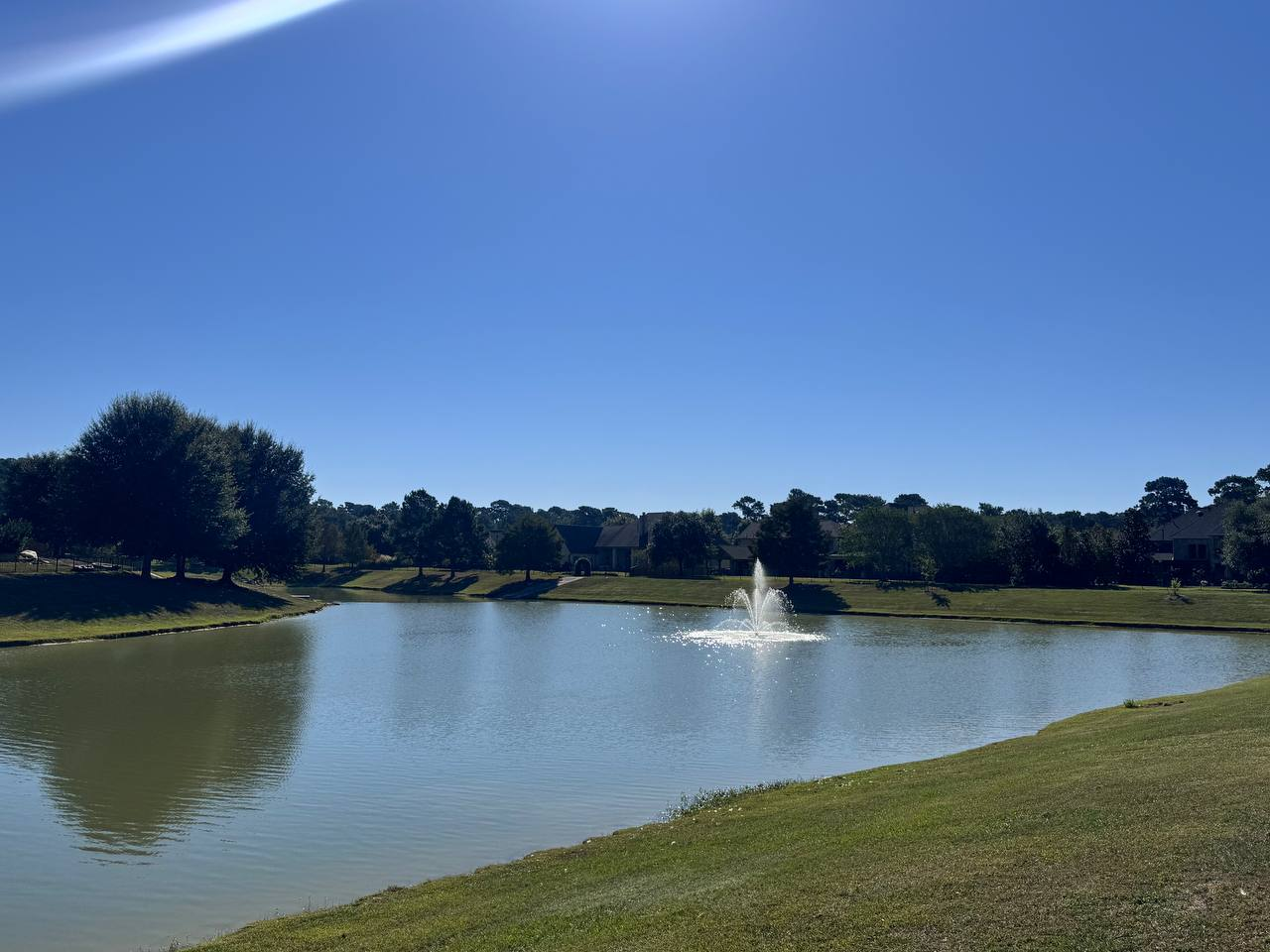
Fountains vs. Bottom Diffuser Aeration: Which Does Your Pond Need?
Two systems, two jobs. Here's how to know which one belongs on your property — and why the answer is sometimes both.
One of the most common questions we get from property owners is some version of this: "I want a fountain — will that take care of my aeration?" It's a fair question, and the honest answer is: it depends on what you're trying to accomplish and how deep your pond is.
Fountains and bottom diffuser systems are both aeration tools, but they work in fundamentally different parts of the water column and solve fundamentally different problems. Choosing the wrong one — or assuming one replaces the other — is one of the most common mistakes we see on managed ponds across Texas.
This post lays out how each system works, what it does well, where it falls short, and how we think about recommending one versus the other (or both) for a given property.
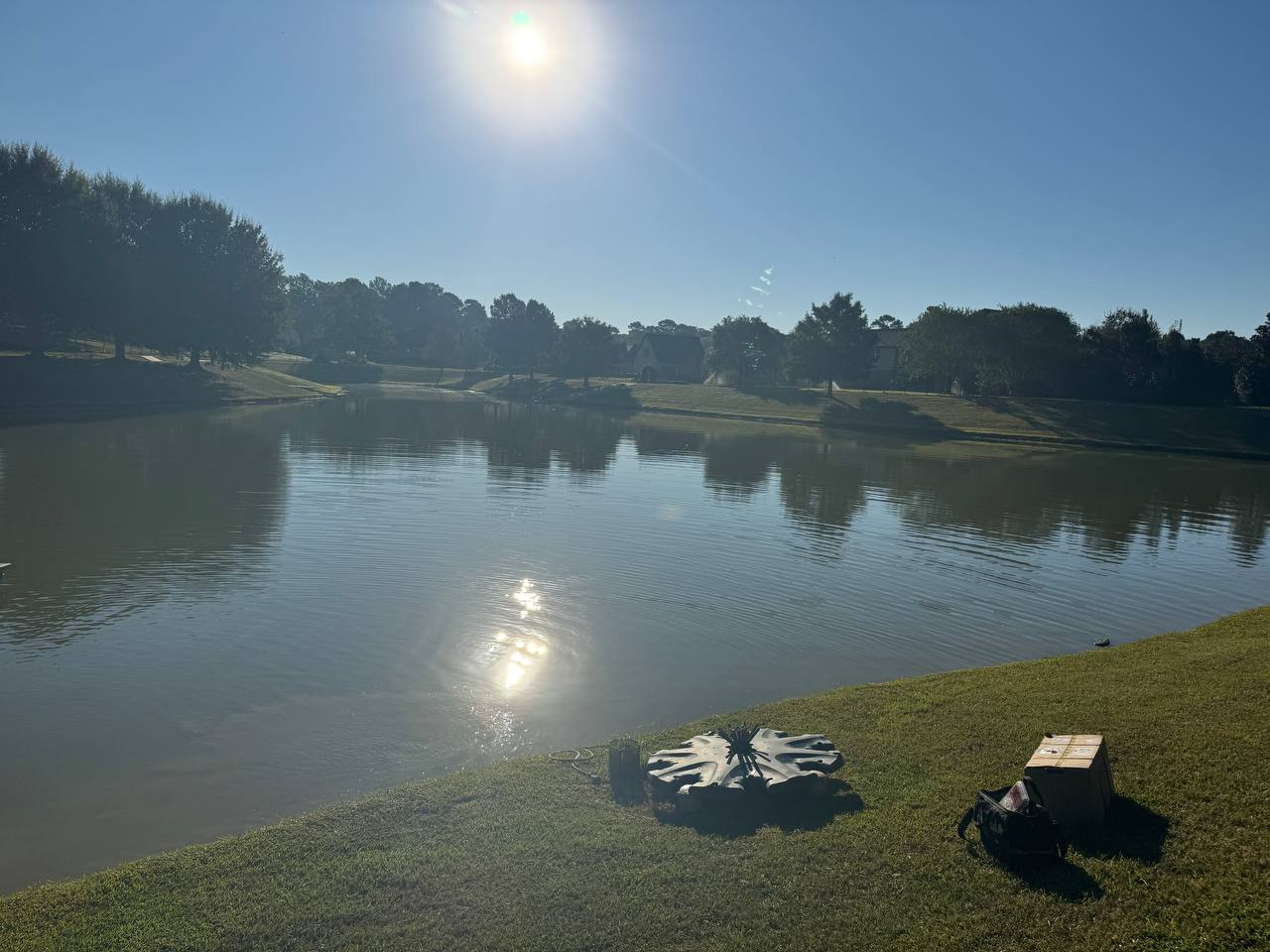
Decorative Fountain Aeration
Surface agitation, visual impact, shallow-water oxygen
A decorative fountain — like the Aquamaster units we install — works by drawing water up from the upper few feet of the pond and spraying it through the air. As the water breaks into droplets and falls back to the surface, it picks up oxygen from the atmosphere. That oxygen-enriched water then mixes back into the top layer of the pond.
The result is meaningful surface aeration and circulation in the upper water column — typically the top three to five feet, depending on the unit size and spray pattern. For ponds that are relatively shallow (under eight feet at their deepest point), a properly sized fountain can provide effective whole-pond aeration because the entire water column is within the range the fountain can influence.
Beyond the functional benefit, a fountain provides a visible, aesthetic focal point that most property owners — HOAs, golf courses, corporate campuses, residential communities — genuinely value. The spray pattern is visible from a distance, it signals active management to residents and visitors, and it creates the kind of visual amenity that adds real perceived value to a property.
Where a fountain starts to lose effectiveness is in deeper water. Once a pond exceeds eight to ten feet in depth, the fountain's circulation simply doesn't reach the bottom. The lower portion of the water column can still stratify, oxygen can still deplete down there, and the muck-decomposing bacteria on the pond floor still don't get the oxygen they need to do their job. A fountain running on a twelve-foot-deep pond is doing real work — just not on the part of the pond that needs it most.
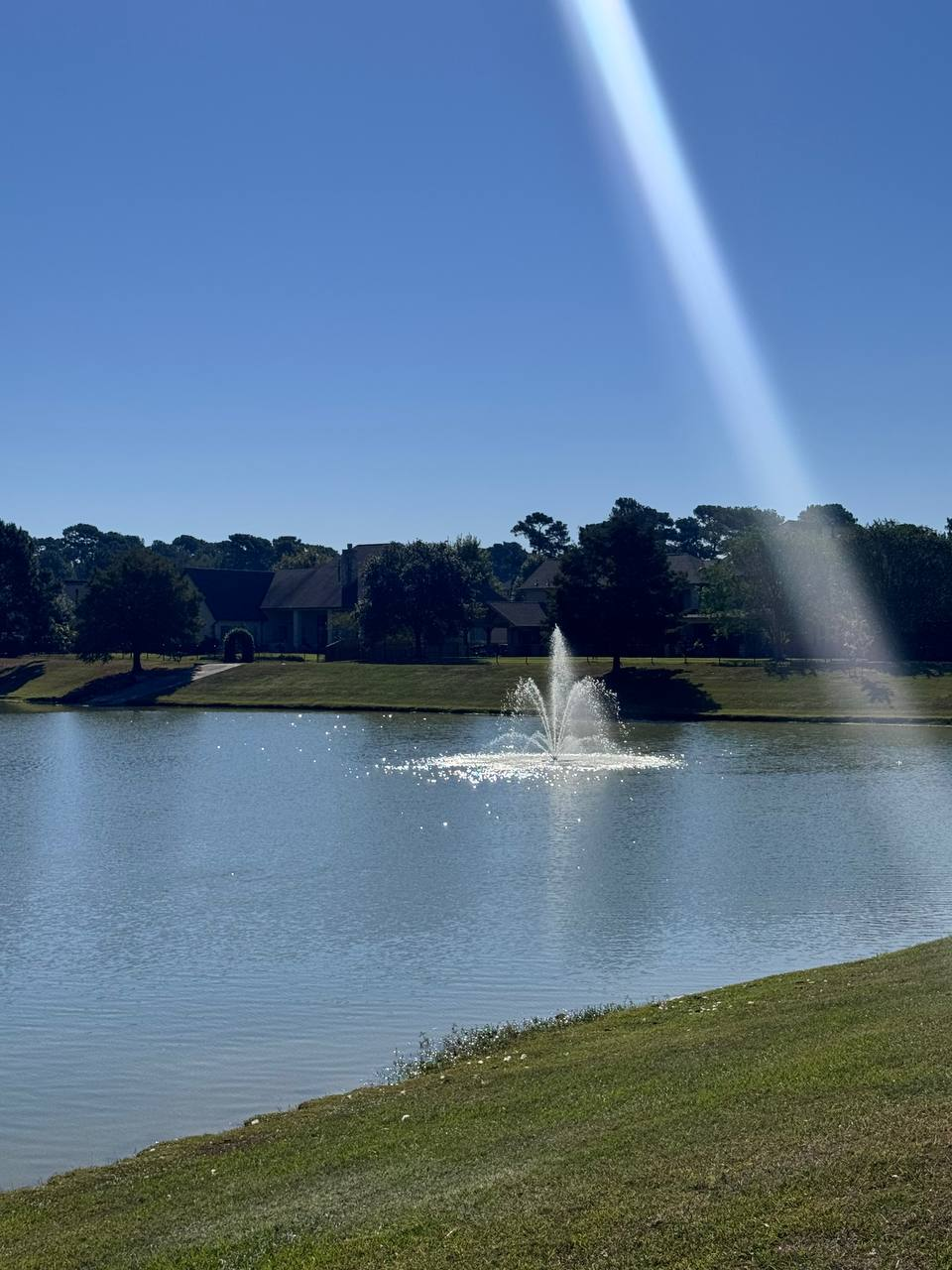
Bottom Diffuser Aeration
Deep-water oxygen, stratification control, muck reduction
A bottom diffuser system works from the opposite end of the water column. An onshore compressor pushes air through tubing to diffuser plates or discs anchored on the pond floor. Those diffusers release a continuous curtain of fine bubbles that rise from the bottom to the surface.
As those bubbles rise, they carry cold, oxygen-depleted bottom water upward and pull warm, oxygenated surface water downward. The result is continuous vertical circulation of the entire water column — not just the top few feet. This is the mechanism that prevents thermal stratification, the layering of warm and cold water that cuts off oxygen to the lower pond and sets the stage for fish kills and muck accumulation.
Bottom diffusers are the right tool when the primary goal is ecological health in deeper water: preventing stratification, maintaining dissolved oxygen at depth, supporting the aerobic bacteria that break down bottom sediment, and protecting fish from the oxygen crashes that follow sudden pond turnover events.
The tradeoff is visual. A bottom diffuser system is largely invisible from shore — you might see a gentle boil or shimmer on the surface above the diffuser plates, but there's no spray pattern, no focal point, and no obvious signal to a passerby that the system is running. For properties where the visual amenity of a water feature matters, a diffuser alone often isn't enough.
How We Think About the Choice
When a property owner asks us about aeration, we start with two questions: How deep is the pond? And what's the primary goal — visual amenity, ecological health, or both?
For ponds under eight feet deep, a properly sized fountain often handles both jobs well enough. It aerates the water column, circulates the pond, and provides the visual element the property wants. We install a lot of Aquamaster fountains on HOA retention ponds, golf course water features, and corporate campus ponds in exactly this situation.
For ponds over eight to ten feet deep, we almost always recommend a bottom diffuser system as the primary aeration tool, with a fountain added on top if the visual element matters to the property. The diffuser handles the deep-water ecological work the fountain can't reach; the fountain handles the surface aesthetics and adds supplemental surface oxygen. Together, they cover the full water column.
The attached letter from Aquamaster goes into more technical detail on the oxygen transfer rates and depth limitations of each system type — it's worth a read if you want the engineering behind the recommendation.
The Bottom Line
Neither system is universally better. A fountain is the right call for a shallow pond where aesthetics matter. A bottom diffuser is the right call for a deep pond where ecological health is the priority. For a deep pond where both matter, run both.
If you're not sure which situation your pond is in, that's exactly the kind of question we answer on a management visit. We'll measure depth, assess the current condition of the water column, and give you a straight recommendation — not a sales pitch for the most expensive option.
— Clearwater Consulting, LLC
Questions About Aeration for Your Property?
We install and maintain both fountain and bottom diffuser systems across Texas. Reach out and we'll assess your pond and recommend the right fit.